
Texas Roadside Transformation
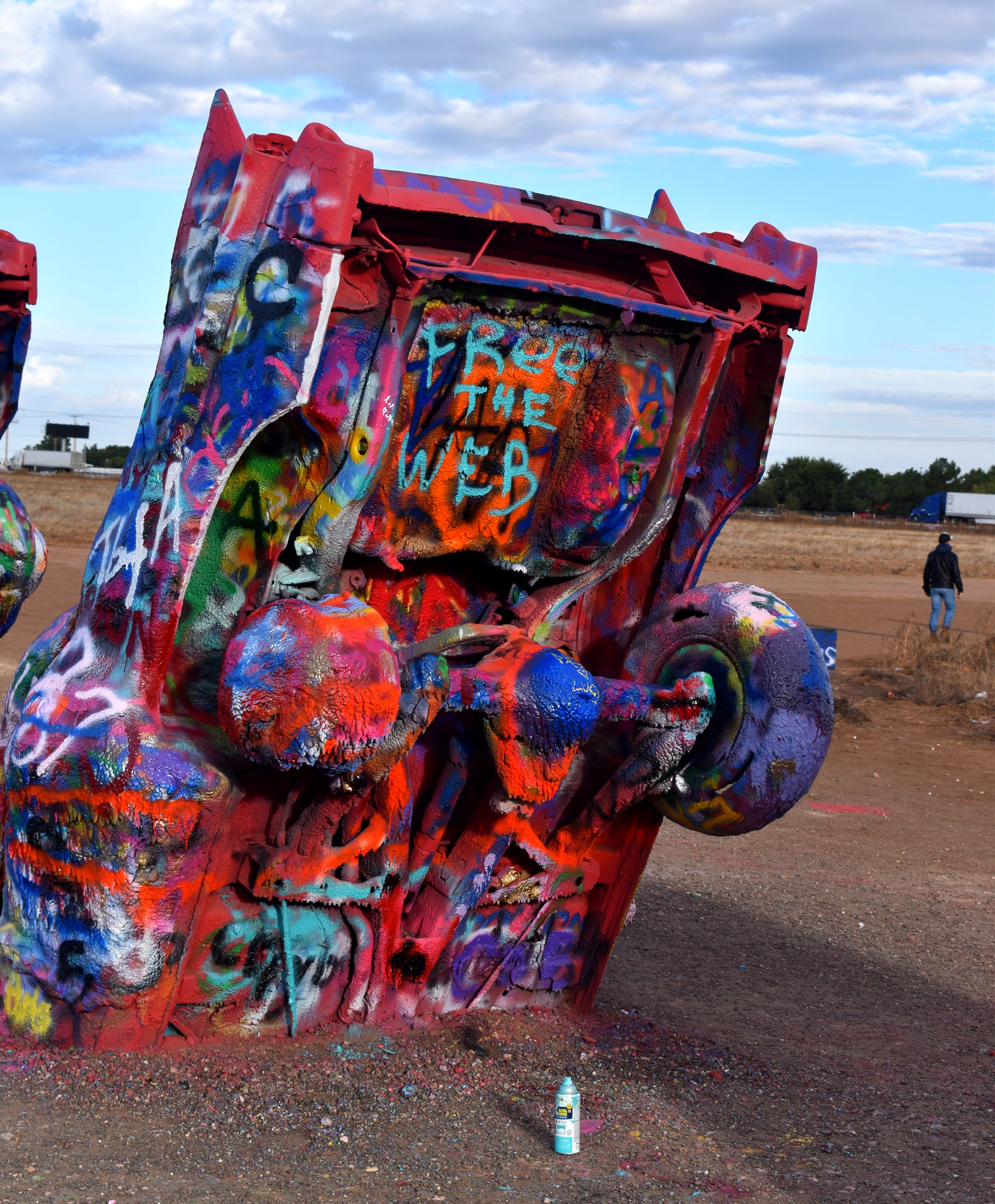
The Cadillac Ranch in Amarillo Texas

Many things set Texas apart from the rest of the United States, but the most visually staggering difference comes in size and scope of Lone Star road design. Big cities are infamous for their spaghetti soup of highway lanes, but even in rural West Texas, you’re unlikely to drive through a town of 50 or 100 thousand without roads wider than 4 lanes in each direction (or interchanges the size of an urban neighborhood).
Texas car infrastructure is oppressive, unavoidable, and holds its own magnificent beauty. Driving between neighborhoods in the Dallas-Fort Worth Metroplex forces the auto driver to bear witness as, it seems, all 8.3 million residents drift along next to you on I-301.
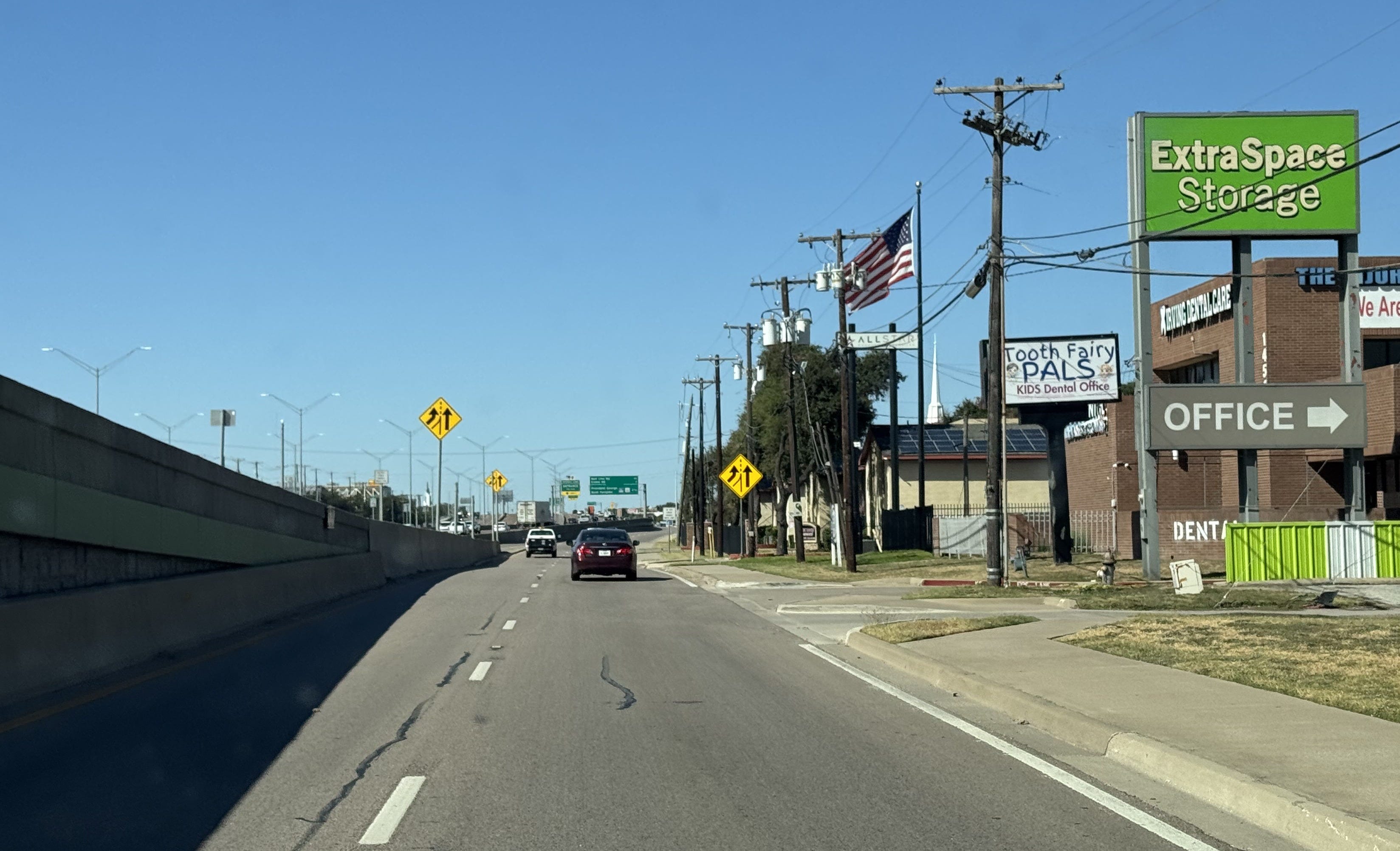
Critical to the Texan highway system is the frontage (or feeder) road, a handful of lanes running parallel to the interstate. Of course, feeder roads exist in urban areas across the U.S., but in Texas they double in size and are a destination within themselves. A plurality of commercial activity and urban apartments are addressed as “## Frontage road X”.
Anyway. I only bring this up because I just stopped in the middle of a frontage road to stare at a bunch of cars half buried in the ground.
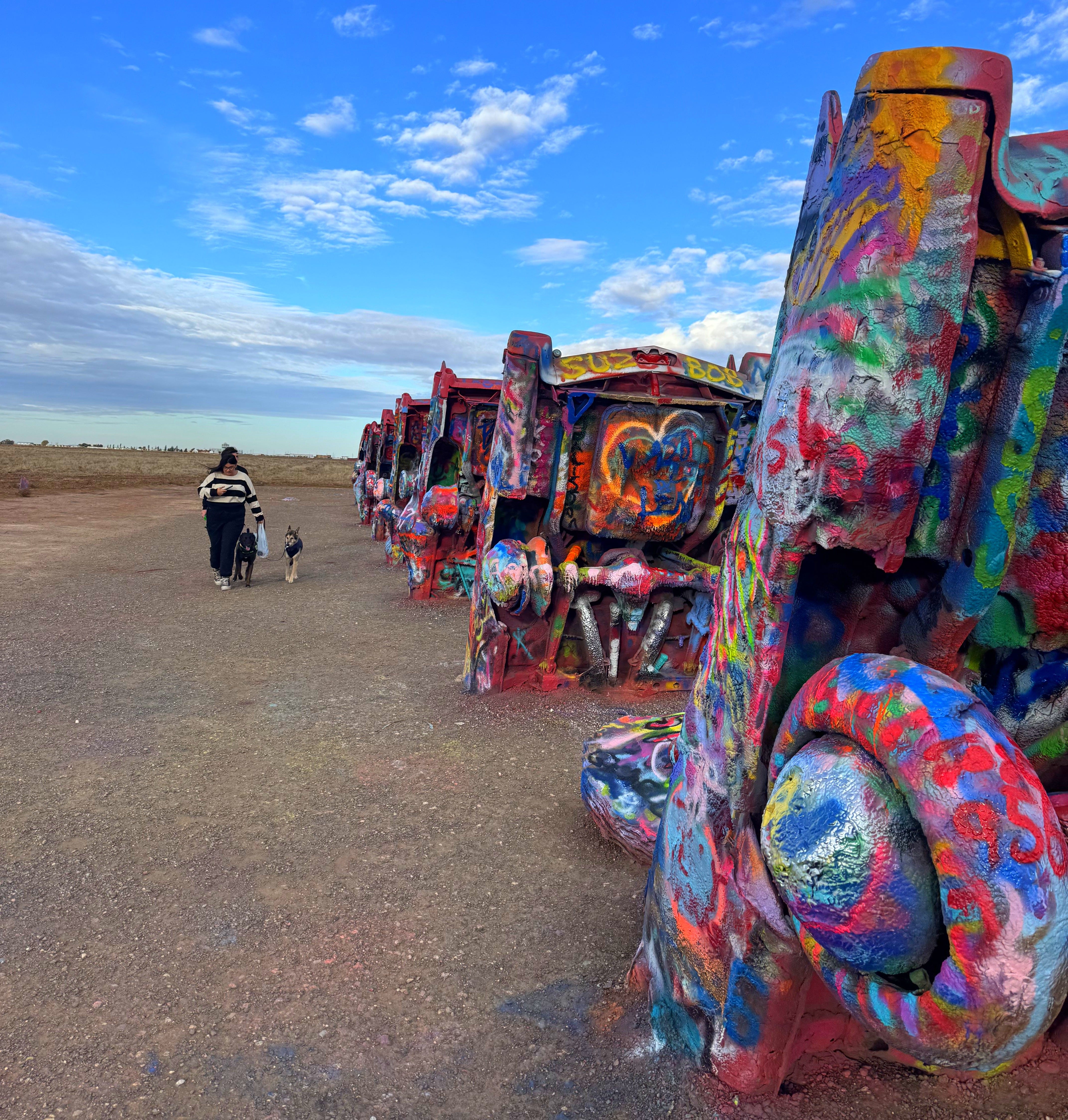
This is the “Cadillac Ranch,” created in 1974 by a group of three architects and artists. On it’s surface, it’s a fun, participatory work of public art typical of a route-66 roadside attraction, but as you might expect by now, we’re not focusing on the art work here.
We’re focusing on the feeder road.
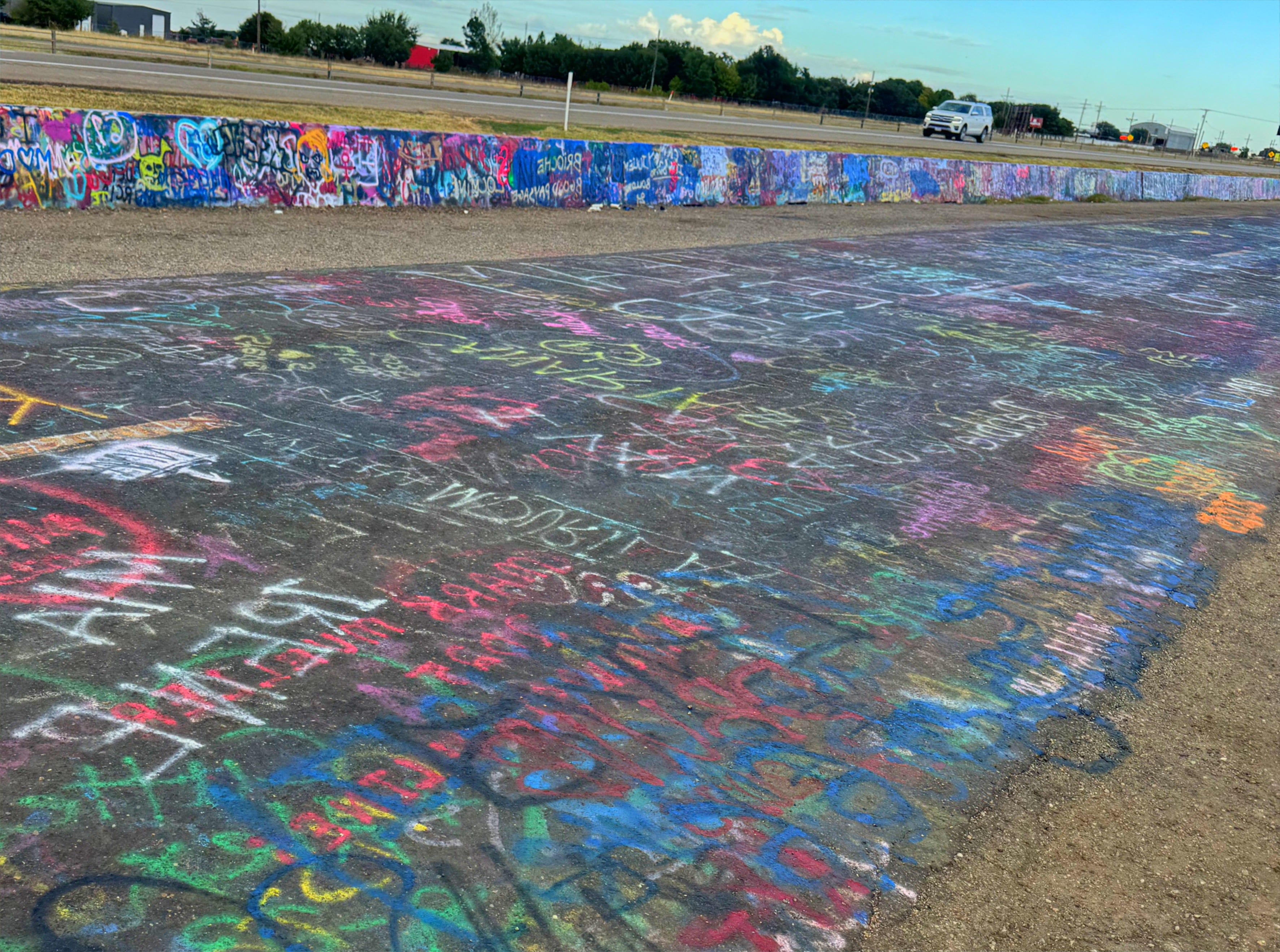
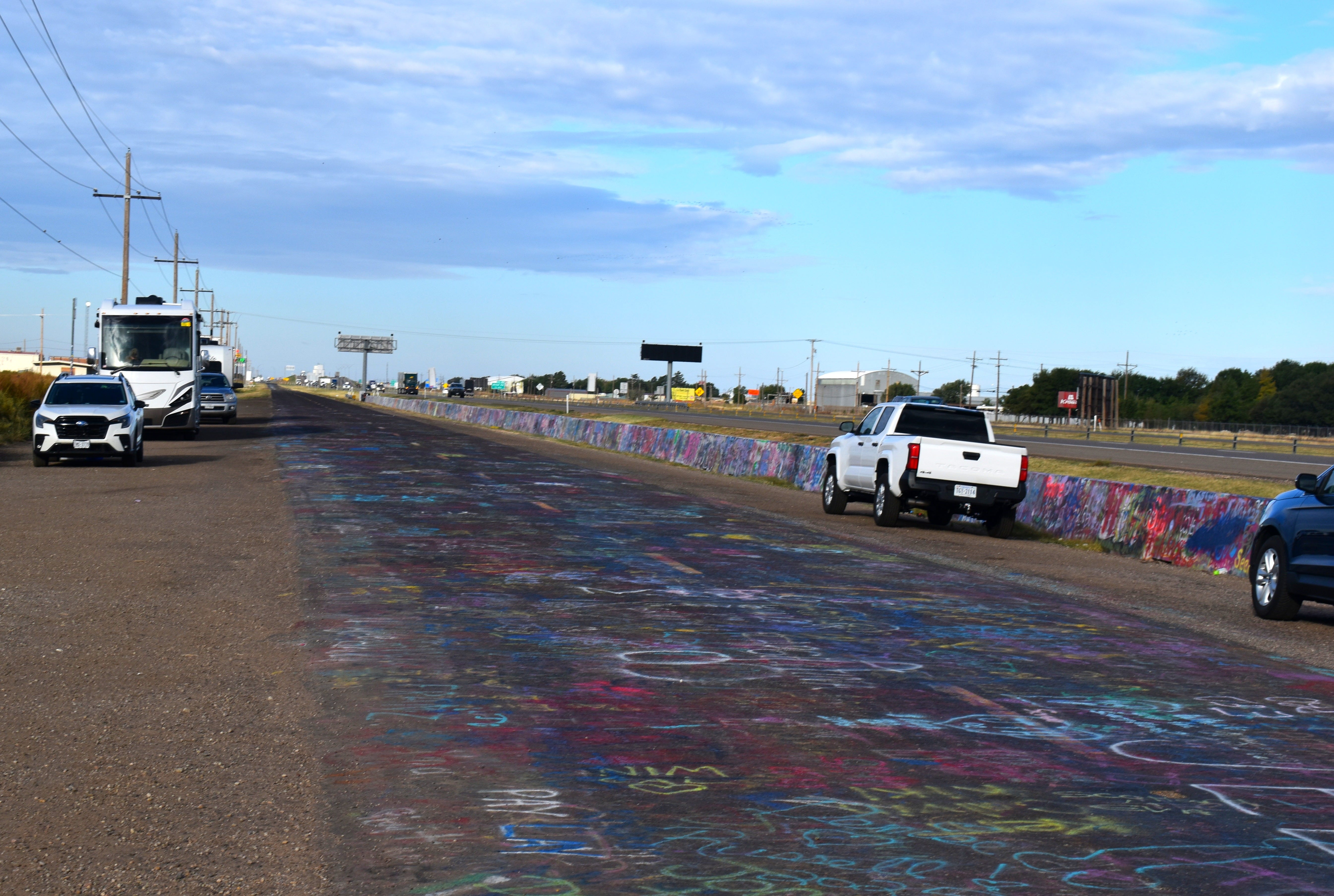
While millions of miles of Texas feeder road are asphalt grey, this patch of I-40 frontage road looks a little different. Creators of the Cadillac ranch have grown to encourage defacing of the cars since their birth in the 70s, but painting over an interstate highway remains illegal. It seems the spirit of Cadillac Ranch- encouraging graffiti for the sake of participatory art- broadens the range of acceptable behavior, even for a few blocks.

It’s hard for me to see this as anything but a good thing. Of course roads should be clearly marked for safety purposes, but the hundred meters along the entrance to the Cadillac Ranch are already bustling with pedestrian activity- even at 8am, when I went. An erasure of clear markings on the road signals to drivers that it is not safe to barrel through at highway speeds. In a sense, the graffiti-covered road, long abandoned by the Public Works Department, has become a Guerilla form of traffic calming. Why put up speed bumps and center bollards when travelers can paint their own colorful form of “slow down” messaging?
Public art is valuable, not just for bringing the “fine arts” to citizens who may not afford admission to galleries and museums, but for confronting everyone in the public realm with novel symbolization- different approaches to space, materials, and all other parts of the world we share. The Cadillac Ranch is a fun spot to stop on a road trip, or a cute place to walk your dog in the morning, but it also encourages you to think about our roadways differently.
Related reading:
Color Your City

On the northern edge of Pittsburgh, Pennsylvania, where hills level out and cascade into the Allegheny river, there sits a house unlike any other. It’s unremarkable in architecture, being a style of two-story brick row home replicated across the state and much of the eastern seaboard, but is notable instead for a maximalist layer of yellow paint, signag…

or I-20. or I-35E or W, or I-635 or 820 or-